Palm Work
Palm Tree Care
Palm care covers proper trimming and removal of palms such as coconut, royal, and sabal, cutting only dead and dying fronds rather than over-pruning.
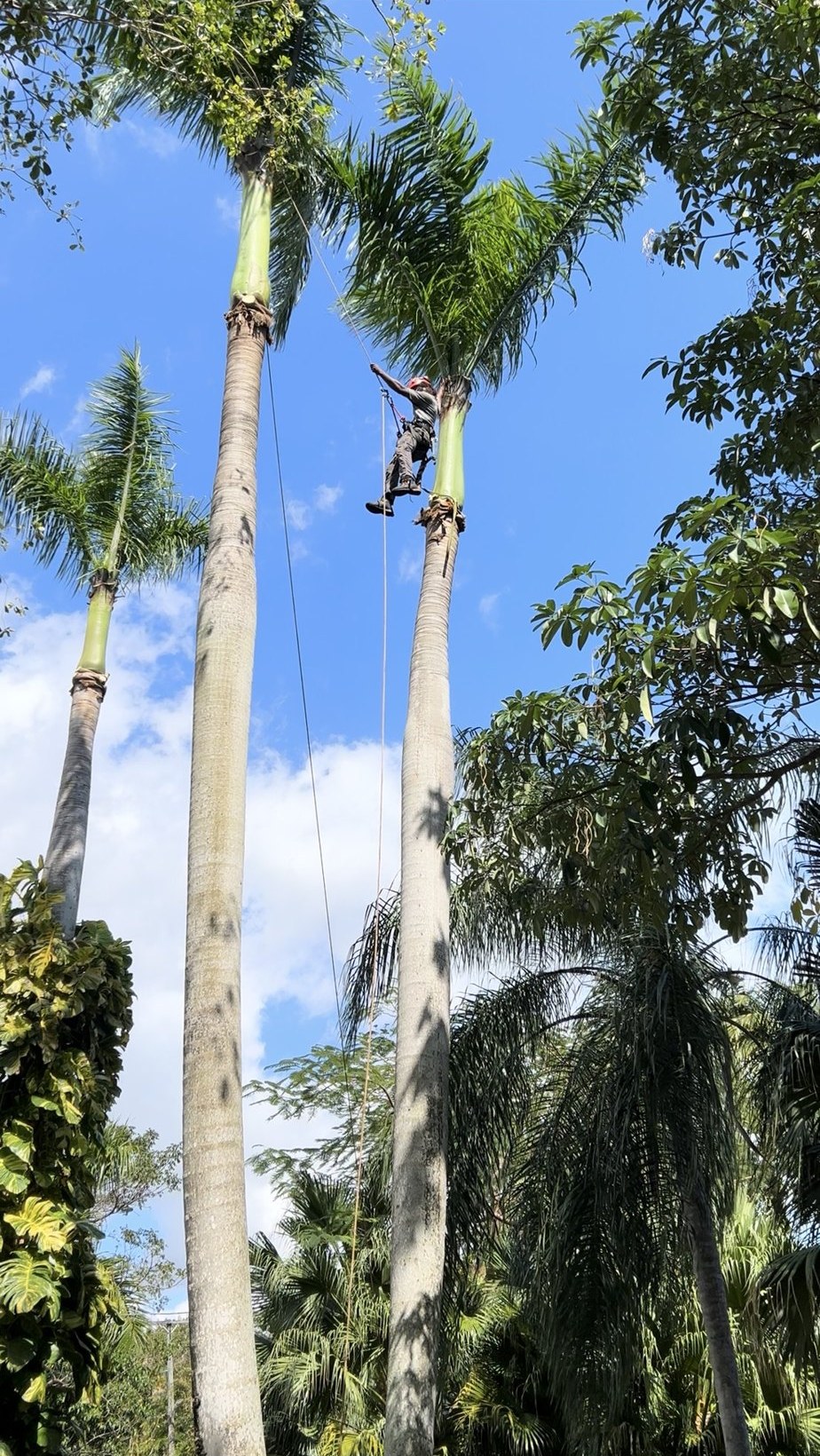
Palms are not pruned like broadleaf trees. Over-trimming a palm into a “hurricane cut” removes green fronds the palm needs and weakens it. Proper palm work removes dead and dying fronds, seed stalks, and fruit while leaving the healthy crown intact.
Subtropical Arborists trims and removes coconut palms, royal palms, sabal palms, and other South Florida palms, working at height by climb or lift as the site allows.
01The Process
What to expect, step by step.
- 01
Assess the crown
The arborist determines which fronds are truly dead or dying and what should stay.
- 02
Trim to standard
Only dead and dying material and seed structures are removed, protecting the palm’s health.
- 03
Clean up
Fronds, pods, and coconuts are removed from the property.
A clean, safe palm with its healthy crown intact — not shaved back into a weak, over-trimmed silhouette.
02Questions
About palm tree care.
How often should palm trees be trimmed in Florida?
Most South Florida palms need trimming once or twice a year, mainly to remove dead fronds and seed pods. Cutting green fronds to make a palm look tidy harms it and is not recommended.
Should palms be given a hurricane cut?
No. Removing most of a palm’s green fronds does not make it safer and weakens the palm. Proper palm trimming removes only dead and dying material.
03Related Services
Tree Trimming
Tree trimming manages canopy size and clearance and removes deadwood so a tree stays healthy, safe, and in scale with the property.
Tree Removal
Tree removal is the controlled, rigged dismantling of a tree when it is dead, hazardous, or must be cleared, taken down piece by piece to protect everything around it.
Structural Pruning
Structural pruning trains a tree to grow with one dominant leader and well-spaced branches so it stays sound as it matures.
Free Estimate
Let’s take a look at your trees.
Every quote follows an on-site visit with the certified arborist. Estimates are free, and there is never a price given from photos alone.